

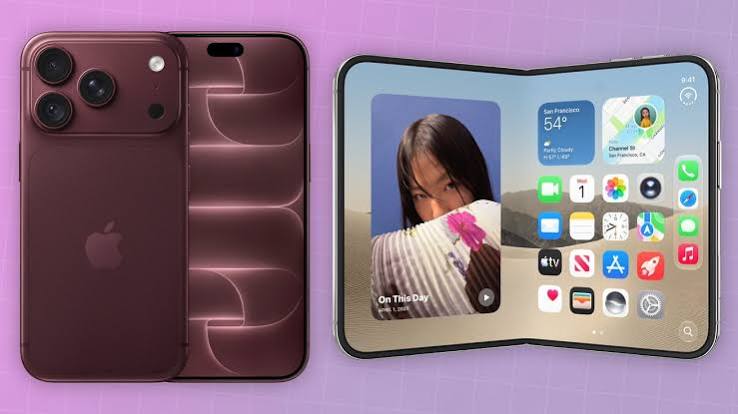
The evolution of mobile silicon and system software has elevated display pipeline requirements from simple rasterization to complex, real-time spatial composition. With the introduction of the A20 Pro system-on-chip and iOS 27, graphics engines must manage high bandwidth, low latency, and efficient thermal profiles.
Indiatimes
However, rendering requirements diverge based on form factor. Comparing the multi-tasking frame-buffer pipeline of the foldable iPhone Duo with the single-target rendering engine of the monolithic iPhone 18 Pro Max highlights distinct strategies in memory bandwidth distribution, frame-buffer management, and display controller execution.
Memory Architecture and LPDDR Subsystem Bandwidth
The A20 Pro chip features an upgraded Low-Power Double Data Rate (LPDDR) unified memory subsystem paired with 12GB of RAM. Unified memory allows the central processing unit, graphics processing unit, and Neural Engine to access a single memory pool without duplicating data buffers across isolated memory channels.
ZDNET
| Memory & Graphics Metric | iPhone Duo Architecture | iPhone 18 Pro Max Architecture |
| Primary Display Target | 7.6-inch variable dual-panel inner display | Monolithic 6.9-inch LTPO OLED panel |
| Active Render Target Resolution | Dual-window Split View scaling (iOS 27) | Single-target 2868 x 1320 resolution |
| Frame-Buffer Memory Layout | Dual active frame buffers + staging buffers | Single primary frame buffer + swap chain |
| Display Controller Channels | Dual-channel display engine with flex-bridge routing | Direct single-channel high-speed MIPI link |
| Peak Compositing Bandwidth | Scaled bandwidth allocation across split viewports | Consolidated bus bandwidth allocation |
| Memory Allocation Overhead | Higher dynamic allocation for multi-app state pools | Lower static allocation for unified swap chains |
In both devices, unified memory architecture provides high bandwidth to support demanding 120Hz ProMotion displays. However, how the operating system and GPU allocate this bandwidth depends on the active display context.
Single-Target Rendering Pipeline in iPhone 18 Pro Max
The rendering pipeline in iPhone 18 Pro Max operates on a streamlined single-target model. Because the device uses a monolithic 6.9-inch display with a resolution of 2868 x 1320 pixels, the display engine renders to a single frame-buffer swap chain.
Render Pass Optimization and Command Submission
In single-target rendering, the iOS 27 Metal graphics stack optimizes command buffer submission for a single viewport:
- Unified Tile-Based Deferred Rendering: The GPU divides the 2868 x 1320 frame buffer into localized tiles. Geometry rasterization, depth testing, and pixel shading occur on-chip within high-speed tile memory before writing the final result back to LPDDR unified memory.
- Deterministic V-Sync Alignment: Frame updates synchronize to a single vertical blanking interval (V-Sync) signal. When switching between refresh rates—such as dropping from 120Hz down to 1Hz during static scenes—the display driver holds the frame-buffer contents without additional compositing overhead.
- Linear Memory Allocation: Because only one application occupies the primary render surface at any time, memory bandwidth scales linearly with screen resolution and dynamic frame rate.
iOS 27 Split View Multi-Tasking Pipeline in iPhone Duo
The iPhone Fold features a 7.6-inch inner display running iOS 27, which introduces multi-window productivity environments. Operating two independent applications side-by-side in Split View requires a multi-tasking frame-buffer pipeline capable of handling dual active render loops simultaneously.
Indiatimes
Dual-Window Frame-Buffer Compositing
When running iOS 27 Split View, the graphics engine manages multiple distinct surface buffers:
- Isolated Offscreen Render Targets: App Workspace A and App Workspace B maintain independent offscreen render targets within unified memory. Each application executes its own draw calls, texture allocation, and UI tree updates without sharing state registers.
- Real-Time Surface Compositing: The iOS 27 window compositor blends the offscreen render targets into a single master frame buffer. This step requires additional GPU read/write passes to compute translucent interface elements, dynamic window dividers, and drop shadows.
- Asynchronous Refresh Rate Synchronization: If App Workspace A renders a 60fps video stream while App Workspace B displays a scrolling 120Hz text view, the display compositor dynamically unifies these mismatched frame rates before committing the final composited frame to the physical panel.
Memory Bandwidth Scaling and Cache Coherency
Managing multiple active frame buffers in iPhone Duo requires distinct memory management strategies compared to the single-target model of iPhone 18 Pro Max.
Compositing Bandwidth Overhead=Read(BufferA)+Read(BufferB)+Write(BufferMaster)
In iPhone 18 Pro Max, frame-buffer memory transfers remain low because the GPU writes the rendered frame directly to memory once per frame cycle.
In iPhone Duo, running two applications side-by-side introduces compositing overhead. The GPU must write the rendered output of both applications to offscreen buffers, read them back into the compositor engine, apply window blending, and write the final composite frame back to LPDDR memory.
To manage this increased memory bandwidth demand without excessive power consumption, the A20 Pro chip utilizes advanced cache coherency mechanisms:
- System-Level Cache (SLC) Partitioning: The A20 Pro allocates dedicated partitions within its large System-Level Cache to store active offscreen frame buffers. This reduces unnecessary read/write cycles to external LPDDR memory chips.
- Compression and Delta Color Management: Render target surfaces use loss-less framebuffer compression. The system reads and updates only modified pixel blocks during window transitions, preserving memory bandwidth.
- Dynamic Resource Prioritization: When one app in Split View goes idle, its render target drops to a reduced update frequency, allowing the active application to utilize maximum memory bandwidth for smooth performance.
Display Engine Execution and Hardware Trade-Offs
Both rendering strategies reflect precise optimization for their respective physical form factors:
- iPhone 18 Pro Max: Focuses on low latencies and power efficiency. By directing all GPU compute power toward a single frame buffer, the system minimizes memory bus activity, reduces thermal output, and extends battery life during extended computational workloads.
- iPhone Duo: Prioritizes multi-window flexibility and UI responsiveness. Through system-level caching, dynamic frame-buffer compositing, and multi-surface synchronization in iOS 27, the display engine supports split-screen multi-tasking while keeping memory latency low across its 7.6-inch display.
